Start from multiphase flow, acoustic cavitation, reactive mixtures, and separation processes.
Research notebook
Design, Control and Scale-up
Highlights of various projects
Compress expensive simulations and complex kinetic data into fast predictive models.
Deploy the model inside control, optimization, and scale-up workflows.
Research
Research notes
Focused ultrasound, neural model predictive control, thermally induced atomization, cavitation modeling, phase-field bubbles, NeuralKinetics, SpectralMol, battery recycling, and industrial process scale-up.
Histotripsy / CFD / Control · Note 01
Predictive and Adaptive Models for Focused-Ultrasound Therapy
This project investigates how cavitation, tissue heterogeneity, skull aberration, and ultrasound pulse design interact during focused-ultrasound therapy. The goal is to combine high-fidelity physics with fast neural-operator surrogates so that treatment planning and pulse delivery can eventually become adaptive, predictive, and safe in real time.
Compressible multiphase flow and Navier-Stokes-Korteweg-style models for nonlinear ultrasound, cavitation onset, and bubble-cloud evolution.
Fourier Neural Operator surrogates replace expensive simulations with fast forecasts of pressure and cavitation-relevant fields.
Model predictive control can adapt pulse amplitude, exposure duration, repetition frequency, and focal steering under safety constraints.
Histotripsy / CFD · Note 01b
How Target Material Reshapes the Focus, Heating, and Ablation
The same transducer produces very different outcomes depending on what it is focused into. Sweeping the target medium across water, PVA, agar, PDMS, and a soft elastomer, the forward acoustic-thermal model shows how the steady pressure field, the post-exposure temperature, and the resulting ablated region shift with acoustic and thermal properties. Softer, more absorbing media reach far higher focal temperatures and produce a well-defined lesion, while low-absorption cases barely heat at all.
The steady pressure amplitude sets where energy concentrates; interface contrast redistributes the focus and adds beam structure.
Absorption and thermal properties determine peak temperature, which spans from a few degrees to well above the ablation threshold across materials.
Only the more absorbing media cross into ablation, giving the compact damaged region that treatment planning must place accurately.

Neural operators / Control · Note 02
Neural Model Predictive Control for Multiphase Processes
Neural Model Predictive Control connects field-level forecasting with real-time actuation. A Fourier Neural Operator can be trained on recent phase fields and candidate actuation histories, then called inside a receding-horizon optimizer. Instead of embedding a full CFD solver inside MPC, the controller uses fast operator rollouts to select actuation and track a target observable.
The neural operator predicts future field evolution over a finite horizon from recent states and candidate control inputs.
The surrogate is called repeatedly inside a constrained optimizer, reducing the cost of horizon evaluation compared with CFD.
The predicted field is mapped to an observable, such as liquid level or phase distribution, and used to update the control action.
Neural operators / Control · Note 02b
MPC Beam Steering to Keep Tissue Out of the Danger Band
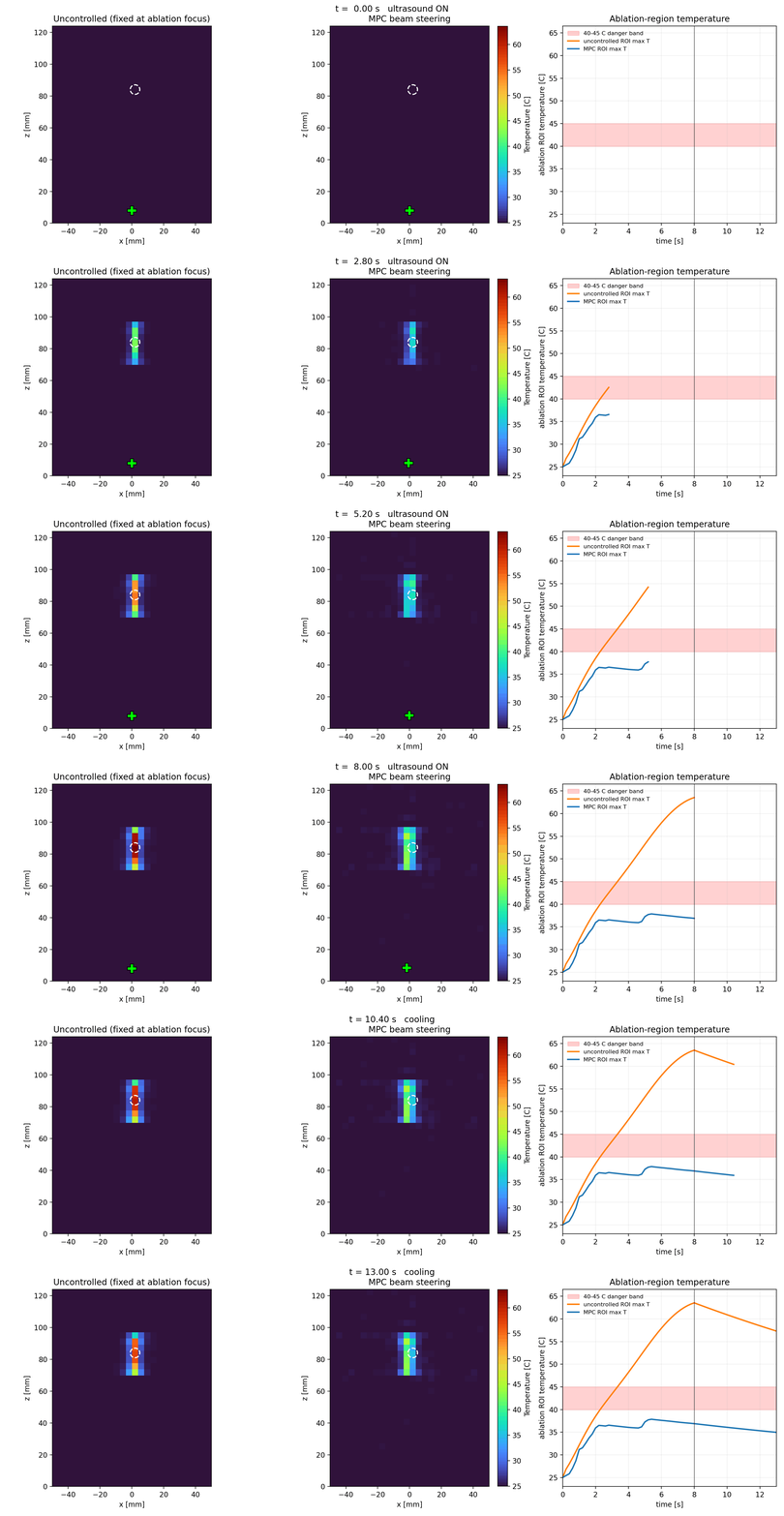
A concrete demonstration of neural model predictive control for focused ultrasound. A composed Fourier Neural Operator forecasts the acoustic and thermal fields for a candidate transducer pose, and a receding-horizon controller steers the beam so that a fixed ablation region never lingers in the 40-45 C partial-damage band, while otherwise tracking the nominal sonication target. An uncontrolled run that holds the beam at the ablation focus is shown side by side for comparison.
The composed operator maps transducer pose to intensity, absorbed heat, and temperature in milliseconds, fast enough to evaluate many candidate poses inside the horizon.
The controller penalizes any excursion of the ablation region into the 40-45 C partial-damage band while tracking the intended sonication target.
Against the uncontrolled baseline, the steered beam holds the region out of the danger band, illustrating closed-loop, safety-aware pulse delivery.
Neural operators / Validation · Note 02c
Does the Surrogate Actually Match the Simulation?
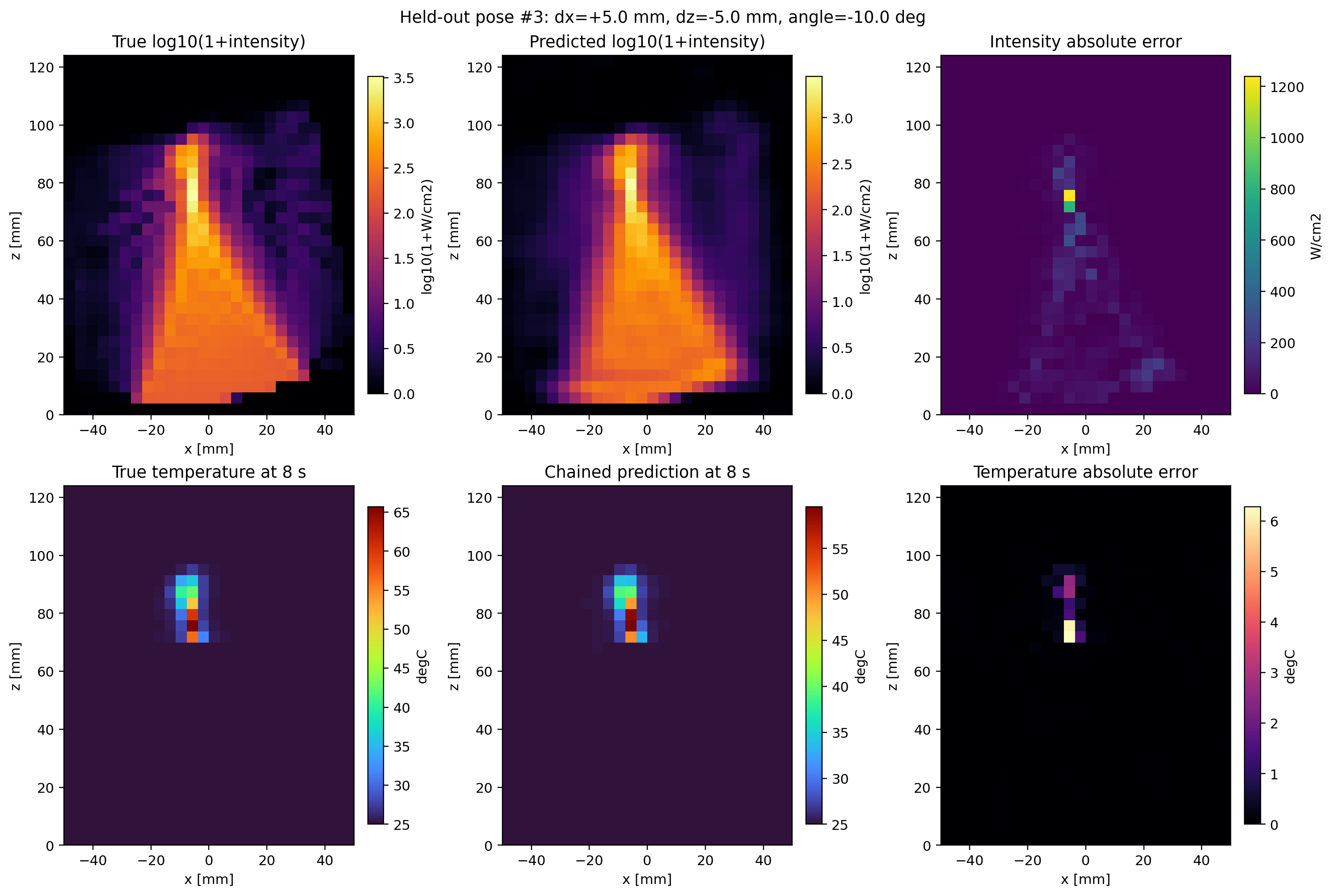
The control loop is only trustworthy if the operator reproduces the physics on poses it never saw during training. On a held-out transducer pose, the composed Fourier Neural Operator predicts the focused-intensity field and, chained through the thermal stage, the temperature field after an 8 s exposure. Side-by-side with the ground-truth simulation and the pointwise error, the prediction captures both the beam shape and the compact heated region, with the largest discrepancies confined to the high-gradient focal core.
The pose-level operator reproduces the deflected beam and its focal position, with error concentrated in the brightest focal pixels.
Chaining the thermal stage recovers the heated region after 8 s, staying within a few degrees of the simulated field almost everywhere.
Because the pose was excluded from training, the agreement is evidence the surrogate can stand in for the solver inside the control horizon.
Droplets / VoF / Combustion · Note 03
Thermally Induced Secondary Atomization
Multicomponent fuel droplets can break apart even without strong external aerodynamic forcing. When a volatile component heats faster than it can diffuse, internal bubbles nucleate, grow, collapse, and eject jets or secondary droplets. This work uses geometric VoF modeling, phase change, species transport, and thermodynamic closure to reproduce puffing, jetting, and micro-explosion regimes.
Internal vapour bubbles create craters, jets, capillary waves, and droplet pinch-off after the liquid film becomes unstable.
A sharp geometric VOF method reconstructs the liquid-gas interface so curvature, surface tension, and phase-change fluxes can be evaluated directly.
The model identifies regimes from simple gas ejection to micro-explosion, linking breakup intensity to bubble size and interfacial dynamics.
Acoustics / Cavitation / Experiments · Note 10
Sound-Made Bubbles: Visualizing Acoustic Cavitation
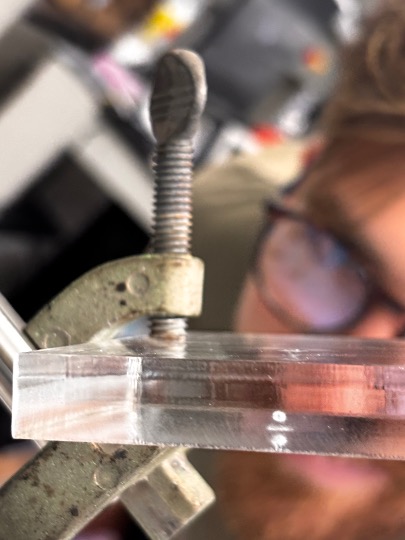
This experimental note looks at how acoustic forcing can generate, trap, and organize bubbles inside transparent liquid domains. The setup provides a direct visual link between sound fields, pressure oscillations, bubble nucleation, and cavitation dynamics, supporting both physical interpretation and validation of ultrasound-driven simulations.
A transparent liquid cell makes hotspot formation and motion visible while acoustic forcing is applied.
The observed bubbles provide evidence of local pressure oscillations, nucleation sites, and sound-induced interface dynamics.
Images like this can be used to compare experimental cavitation behavior with numerical predictions.
Ultrasound / Cavitation / Reactors · Note 04
Cavitation Modeling Across Reactors and Media
Cavitation is the bridge between acoustics and process intensification. The same bubble physics that matters in histotripsy also appears in ultrasonic reactors. This modeling work connects frequency, pressure amplitude, reactor geometry, and local cavitation activity to measurable process performance.
Cavitation onset is treated as a coupled function of pressure waveform, frequency, nuclei population, and liquid properties.
Reactor design links acoustic energy delivery to bubble spatial distribution, mixing, and process-intensification outcomes.
The practical objective is to move from qualitative cavitation activity to geometry-aware design rules and operating envelopes.
Phase field / Bubble dynamics · Note 05
Phase-Field Bubble Modeling with Navier-Stokes-Korteweg Physics
Diffuse-interface modeling offers a way to describe vapor-liquid transitions without explicitly tracking a sharp boundary. In the Navier-Stokes-Korteweg formulation, capillary stresses and metastable thermodynamics allow bubbles, interfaces, and collapse dynamics to emerge from the continuum model.
The interface is represented through a phase field rather than explicit reconstruction, enabling topological change during bubble nucleation and collapse.
Metastable equations of state allow the model to represent cavitation-relevant liquid-vapour transitions under strong forcing.
High-fidelity simulations generate training data for neural operators that can later support real-time control.
Neural operators / Chemical kinetics · Note 06
NeuralKinetics: Learning the Chemistry of Mixtures
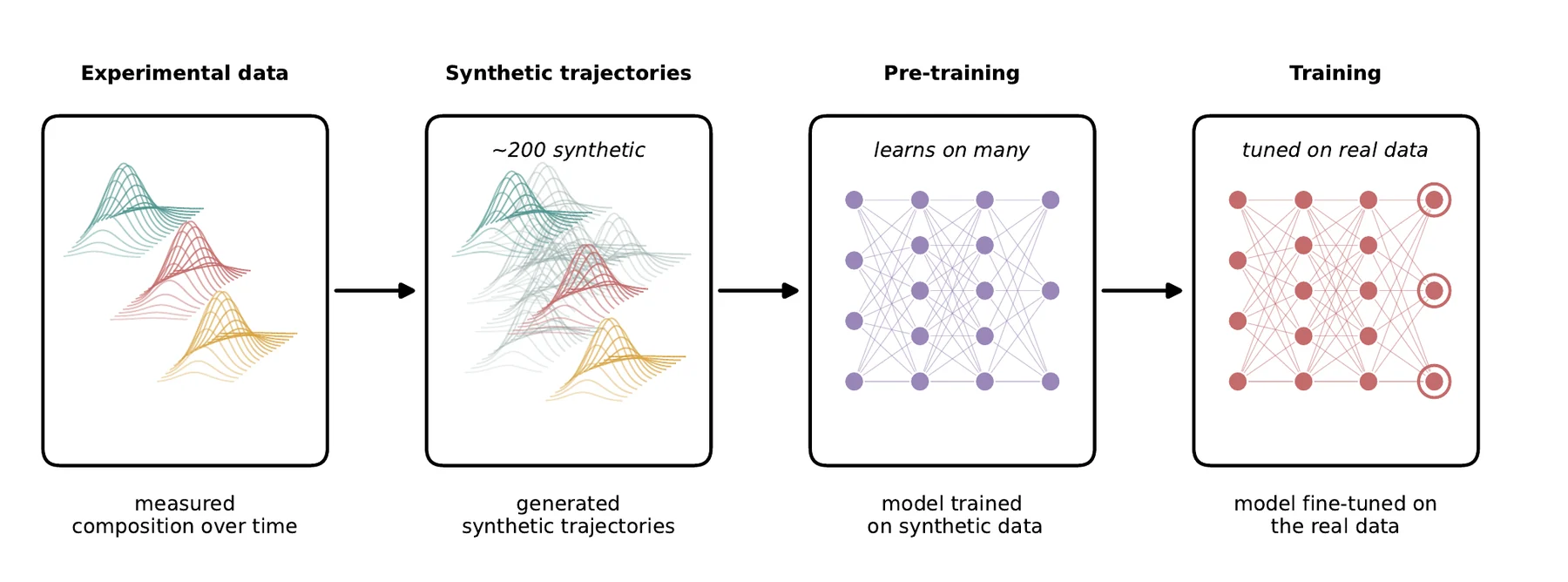
Complex mixtures contain thousands of unresolved molecules, making conventional kinetic schemes difficult to construct and fit. NeuralKinetics replaces the explicit reaction network with an operator that evolves the whole composition map over time. The mixture is represented as abundance fields over carbon number and double-bond equivalent, allowing the model to learn chemical evolution directly from compositional surfaces.
A reacting mixture becomes a multi-channel field rather than a list of model compounds or an explicit mechanism.
The learned map advances the whole compositional surface from the initial state to a requested time.
This framework is being applied to oxidative desulfurization and complex feedstocks whose full composition is not manageable.
Neural operators / Process control · Note 07
Neural-Operator Control: Steering a Recycling Plant in Real Time
Black-mass feedstock is inherently variable: grade drifts, contaminants spike, and signal quality wanders within minutes. Conventional CFD is far too slow to sit inside a control loop, so the plant runs open-loop and absorbs the variability as off-spec product. Neural-Operator Control replaces the in-loop simulator with a learned operator that advances the mixing field of each unit operation directly, fast enough to predict product quality and retune the process every second. A closed-loop controller reads the prediction and adjusts reagent dosing to defend output purity as the feed fluctuates.
A Fourier neural operator advances the stream-function field of each stage, recovering an incompressible velocity field that Lagrangian particles ride — dissolving in leaching, settling in clarification, forming in precipitation, bubbling in carbonation.
The operator predicts Li₂CO₃ purity in real time; a PI controller acts on the quality and impurity error, moving acid, soda, and reductant setpoints to reject disturbances before they reach the product.
Against an open-loop baseline, the controlled run holds purity through a quality sag, a cobalt spike, and a noise burst — turning inconsistent, low-cost feedstock into consistent, battery-grade output.
Drug discovery / Evolutionary design · Note 07
SpectralMol: Designing Molecules in Frequency Space
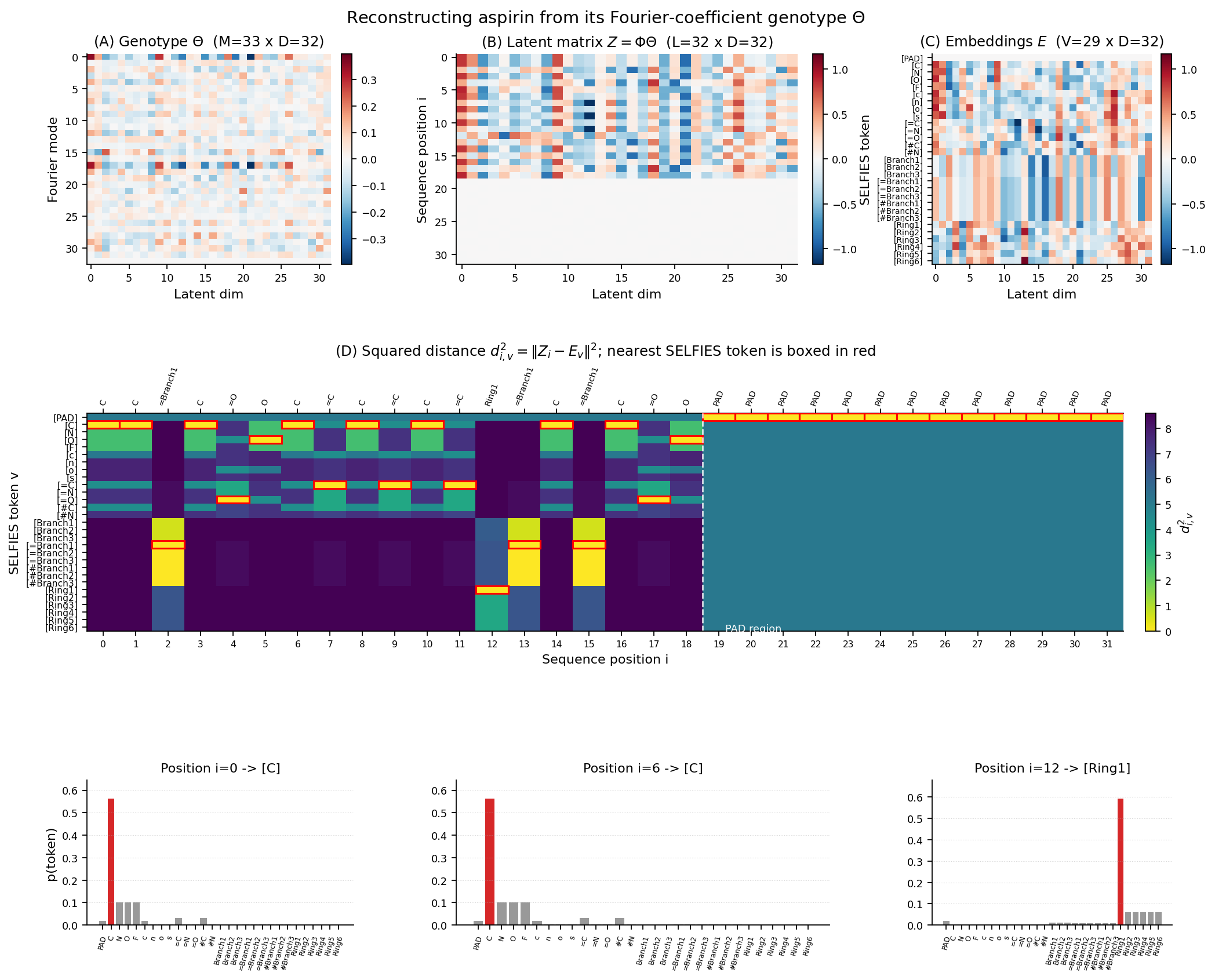
SpectralMol explores molecule generation through a compact spectral representation. Instead of evolving molecular strings or graphs directly, the method evolves Fourier coefficients, projects them into latent vectors, and decodes valid molecules through SELFIES-constrained reconstruction. This creates a structured search space where low-frequency modes control scaffold-level changes and high-frequency modes tune local substructure.
The genotype is a compact matrix of Fourier coefficients rather than a large latent sequence.
Multi-objective optimization can preserve trade-offs between docking, drug-likeness, and synthesizability.
The frequency-space view gives a controllable way to move between global scaffold changes and local chemical edits.
Battery recycling / Circular process technology · Note 08
CirCoLi: Reimagining Lithium-ion Battery Recycling
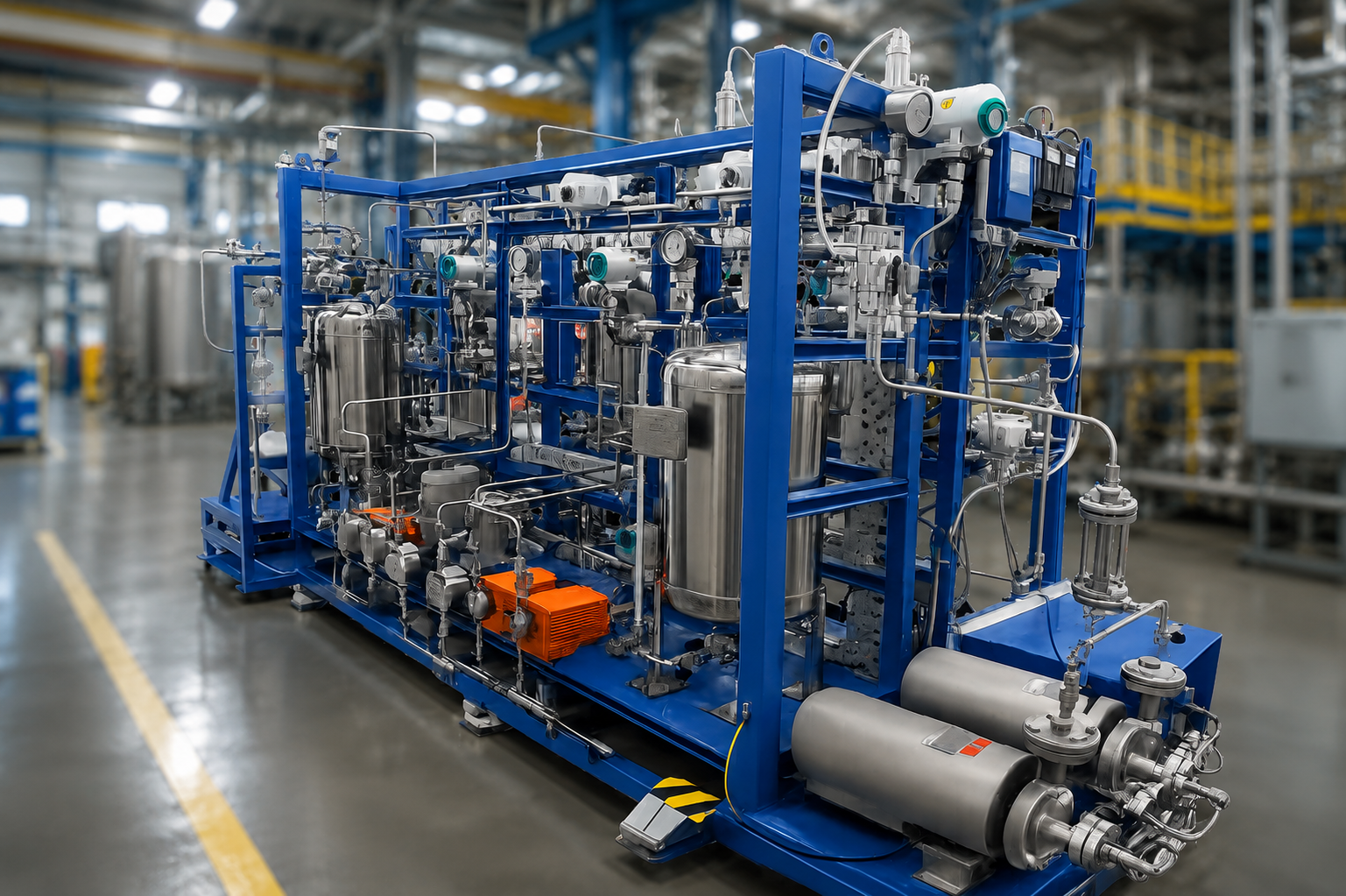
CirCoLi translates process-intensification into hydrometallurgical battery recycling. The platform focuses on recovering useful battery-material streams from black mass with simpler flowsheets and a path toward modular deployment.
Routes for nickel-bearing chemistries and LFP are developed around selective recovery of lithium and cathode-relevant precursors.
CirCoLi is a proprietary technology based on new reactor design and associated cleaner recycling processes.
Make critical-material recovery more local, cleaner, and scalable enough to support electric mobility and stationary storage.
Process scale-up / Demonstration · Note 09
Industrial Demonstration and Process Scale-up
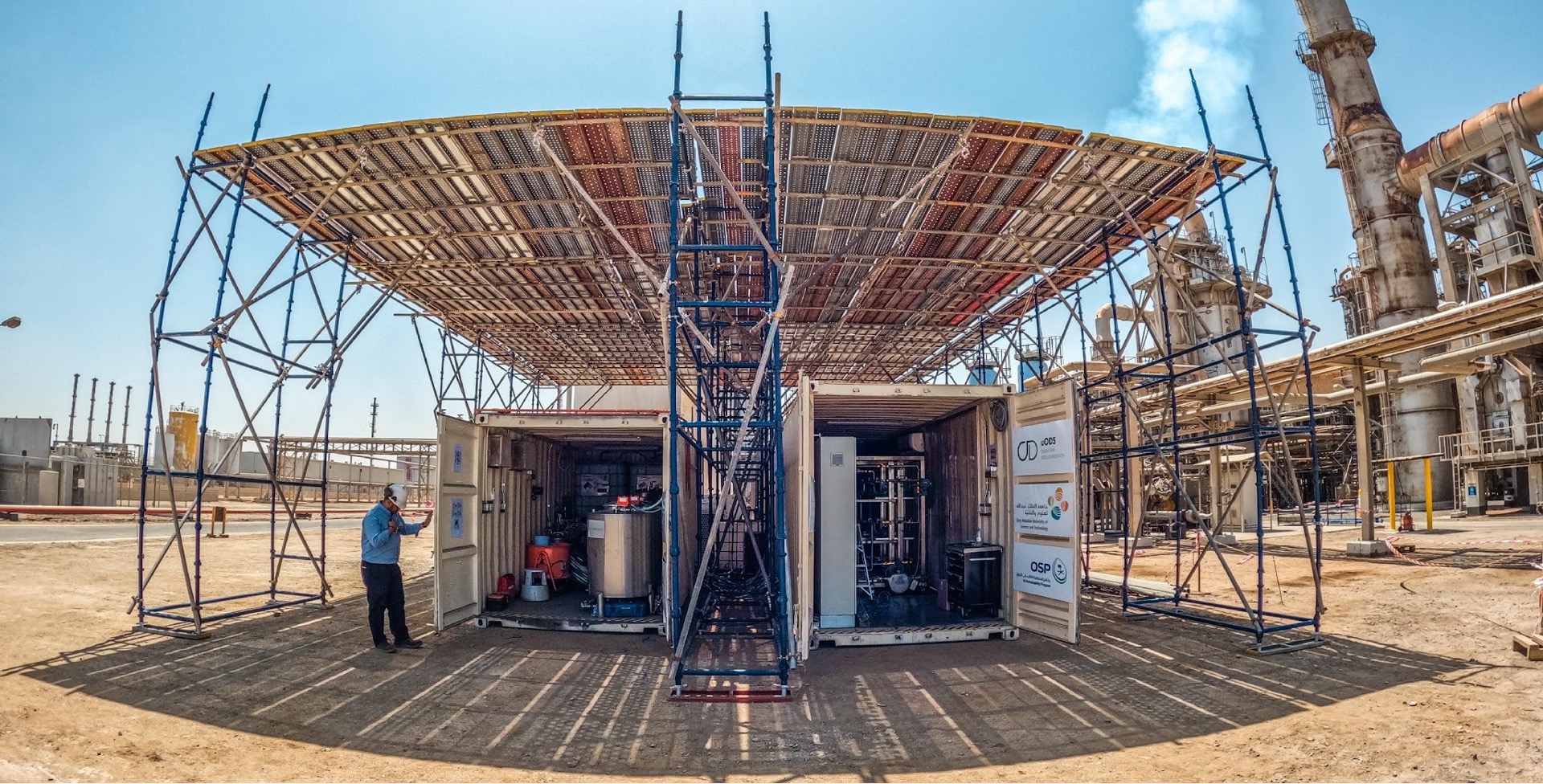
Beyond modeling, this work also connects laboratory concepts to pilot and demonstration systems. This includes process hardware, continuous demonstrations, reactor design, control logic, and collaboration with industrial partners to move process-intensification technologies toward practical deployment.
Pilot and demonstration campaigns reveal operational issues that cannot be seen from small experiments alone.
Digital monitoring and control architectures help translate reactor physics into stable process operation.
The objective is to bridge research-grade physics with reliable industrial deployment.
Graph neural operators / Process networks · Note 10
Conservative Hybrid Graph Network: Learning Flowsheet Dynamics
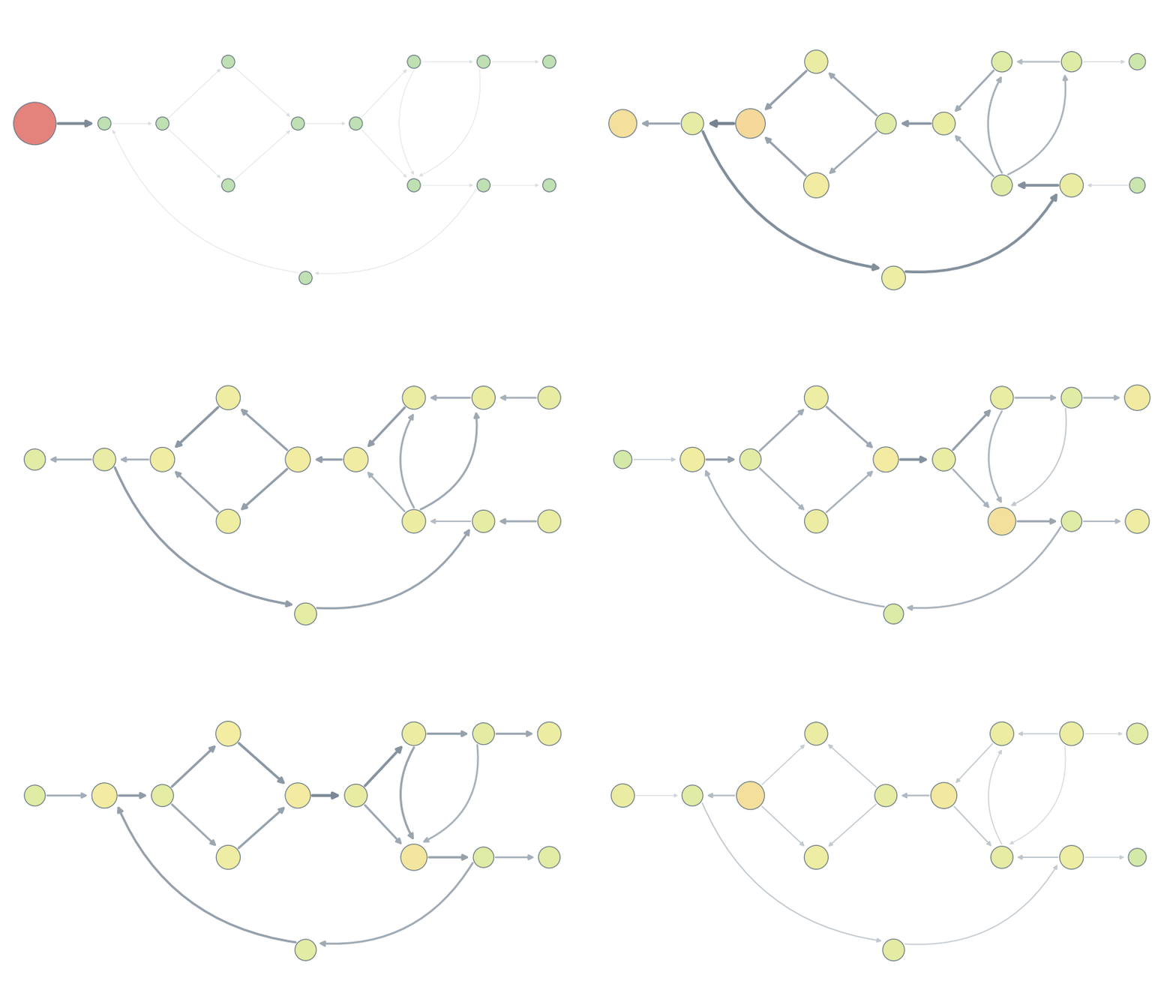
A process plant is a graph: units are nodes, streams are edges, and the dynamics live on both. Purely data-driven surrogates learn these dynamics well on average but violate the one property an operator will never forgive — they lose or invent mass. The Conservative Hybrid Graph Network encodes the balance structure directly into the architecture. Learned components set how fast material moves along each edge, while the update itself is written as a difference of edge flows, so total inventory is conserved to machine precision by construction rather than by penalty. What is learned is the constitutive behaviour; what is guaranteed is the bookkeeping.
Node states evolve through an antisymmetric edge-flow update, so whatever leaves one unit arrives at its neighbour and global inventory is exactly preserved along the rollout.
Known topology, stoichiometry, and balance structure are imposed; only the uncertain closures — effective conductances, transfer rates, and latent unit behaviour — are learned from data.
Because the invariant holds at every step rather than on average, long autoregressive horizons stay stable even when the operating configuration switches mid-trajectory.
Gallery
Figures and videos
Selected media.
Droplet atomization
Thermally induced secondary atomization video.
High-resolution HIFU video
High-resolution focused-ultrasound simulation video.
Neural MPC simulation
Neural model predictive control simulation with level tracking.
MPC beam steering
MPC beam steering keeping the ablation region out of the 40-45 C danger band.
HIFU material sweep
Acoustic pressure, heating, and ablation across five target media.
FNO prediction on a held-out pose
Composed-FNO intensity and temperature predictions versus simulation on an unseen pose.
Luberef demonstration
Industrial demonstration image from process-intensification work.
NeuralKinetics workflow
Measured composition, synthetic trajectories, pre-training, and fine-tuning.
SpectralMol pipeline
Fourier-coefficient genotype projected to a latent sequence and decoded to a molecule.
Ultrasonically induced cavitation
Cavitation in industrial reactor modelled with in-house solver.
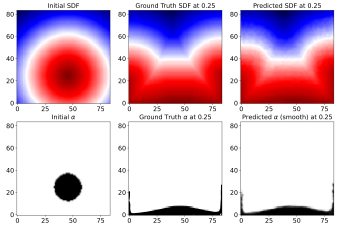
Falling droplet prediction
Falling-droplet surrogate prediction comparing SDF and alpha fields.
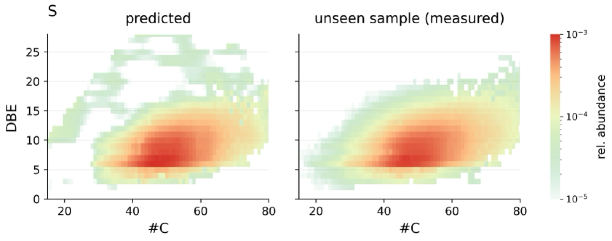
Sulfur abundance heatmap
Predicted versus measured sulfur-class abundance over carbon number and DBE using NeuralKinetics.
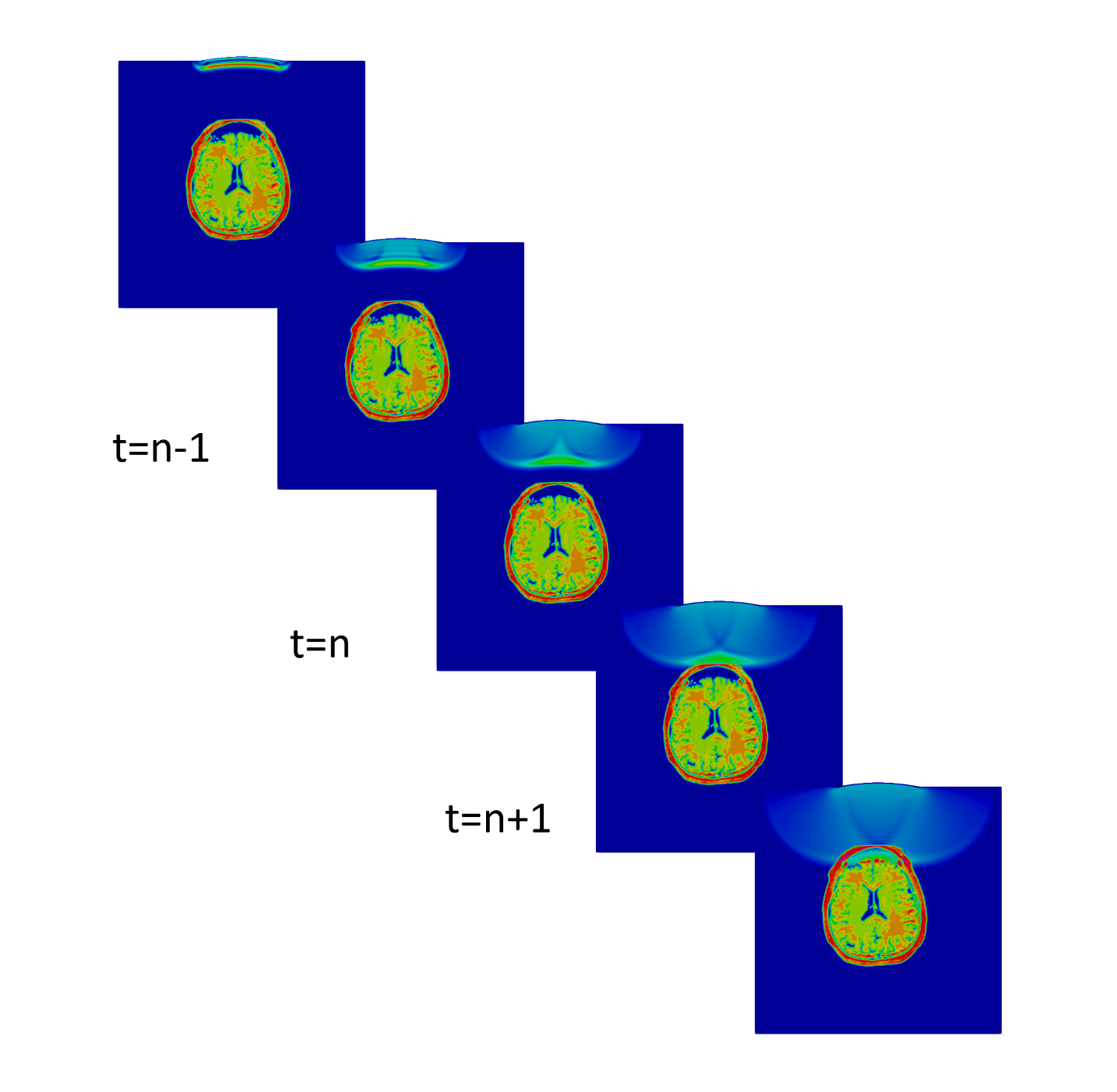
Neural Operator learned wave propagation through brain
Focused-ultrasound field evolution through a heterogeneous brain-like geometry predicted with a neural operator.
Phase-field CO₂ bubbles
Diffuse-interface simulation of CO₂ bubble dynamics.
Industrial process skid
Modular process skid for LFP/NMC battery recycling.
Contacts
Get in touch
For research collaborations, startups, talks, and technical discussions.